THE FOOD CONNECTION
  • Home
  • Recipes
  • Meal Planning
  • Tips and Tricks

Supporting a Healthy Relationship With Food

27/5/2022

0 Comments

 
Supporting a Healthy Relationship with Food
​Babies are intuitive eaters. They are in tune with their body’s natural ability to know when they are hungry and when they are satisfied.
To support your child to stay in touch with their body cues and retain this ability into adulthood, there are a range of things you can do around family food times.
A parent or caregiver’s role is to decide when, where and what food is offered to children. Adopt a flexible approach to your child’s eating, and allow them to choose what and how much to eat.
Below are five areas in which you can support your child or children to develop an ongoing healthy relationship with food.
Area 1: Mealtimes
  • Implement a flexible and reliable feeding routine. Offer meals and snacks regularly to children – about every 2 to 3 hours for younger children and 2 to 4 hours for school aged children. This can be individualised to your family based on your culture and your lifestyle.
  • Prepare your child in advance for meals. Let them know that lunch or dinner will be on the table in five minutes to give them time to finish their activity.
  • Try having your child serve themselves by placing food buffet style in the centre of the table. Your child can then take a small serve and go back for seconds if they would like more. It also offers them independence, and this can help reduce any power struggles that may occur at mealtimes.
  • Eat together as a family as much as you can and avoid distractions, such as the TV. It is a good opportunity to catch up on what everyone has been doing. This will help your child develop their social skills and increase their sense of confidence.
  • Give your child enough time to eat – they are still developing their eating skills so need plenty of time. Remove the food after a while if your child has lost interest.
Area 2: Nourishing foods
  • Aim to offer a variety of nourishing and tasty foods. This will allow your child to experiment with different foods and find out what they like.
  • Keep offering new foods without expectations. Always include a food that your child likes so you know they will not go hungry.
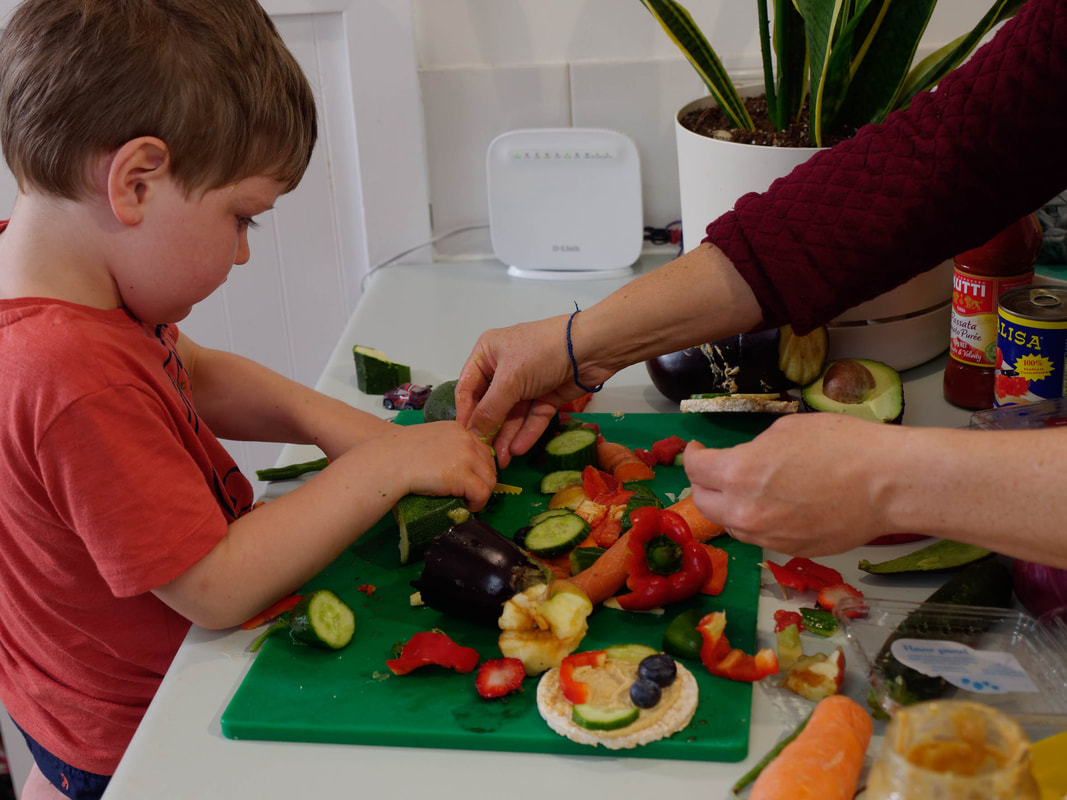
  • Help your child get hands-on learning experiences through gardening and cooking. This can help to familiarise your child with new foods.
Area 3: Positive food experiences
  • Make peace will all types of foods and use neutral terms to talk about food. When we put labels on food as “good” and “bad,” we could be making our children feel like certain foods are off limits, which can then create unhealthy associations with food.
  • Avoid rules around eating. This includes no rules about the number of bites a child must have before their dinner is finished. Simply put, do not bargain with your child about  eating. Saying things like, “take two more bites” or “finish your food” or “you can’t have dessert” does not allow your child to identify if they are satisfied or still hungry.
  • Offer meals in a relaxed environment. If there is conflict or if children are ignored at mealtime, eating is likely to be associated with these feelings in the future.
  • Try not to use food as a reward, punishment or to calm your child as it can complicate how they feel about food and eating.
Area 4: Body acceptance
  • Provide unconditional love and support for your child’s body. This will help your child trust their body including hunger and fullness cues.
  • Accept your child’s body for the way it is today. Their bodies will change shape as they grow and this is normal.
Area 5: Role Modelling
  • Children love to copy adults. By eating a wide variety of foods, you will show your child that these foods are enjoyable and delicious.
  • Show your child that you accept and honour your body and what it does for you – rather than what it looks like. This will help them to feel good in their own body no matter what it looks like.
0 Comments

Your comment will be posted after it is approved.


Leave a Reply.

    The Food Connection

    Tips and Tricks have been prepared by nutritionists, dieticians, health professionals and parents from Frankston and the Mornington Peninsula.

    Tips & Tricks
    Cooking with Kids
    ​
    After School Snack Ideas
    Easy Tips for Freezing Food
    Fakeaway Fridays
    Keeping Fruit and Veggies Longer
    Kitchen Staples
    Meal Planning Tips
    Snacks on a Stick
    ​Top five tips for encouraging children to enjoy more vegetables
    ​
    How to Reduce Food Waste
    ​
    Supporting a Healthy Relationship With Food

    RSS Feed

Picture
Recipes
Meal Planning
Tips and Tricks

​© COPYRIGHT 2023. ALL RIGHTS RESERVED.
​Website by Out of the Box Consulting
  • Home
  • Recipes
  • Meal Planning
  • Tips and Tricks